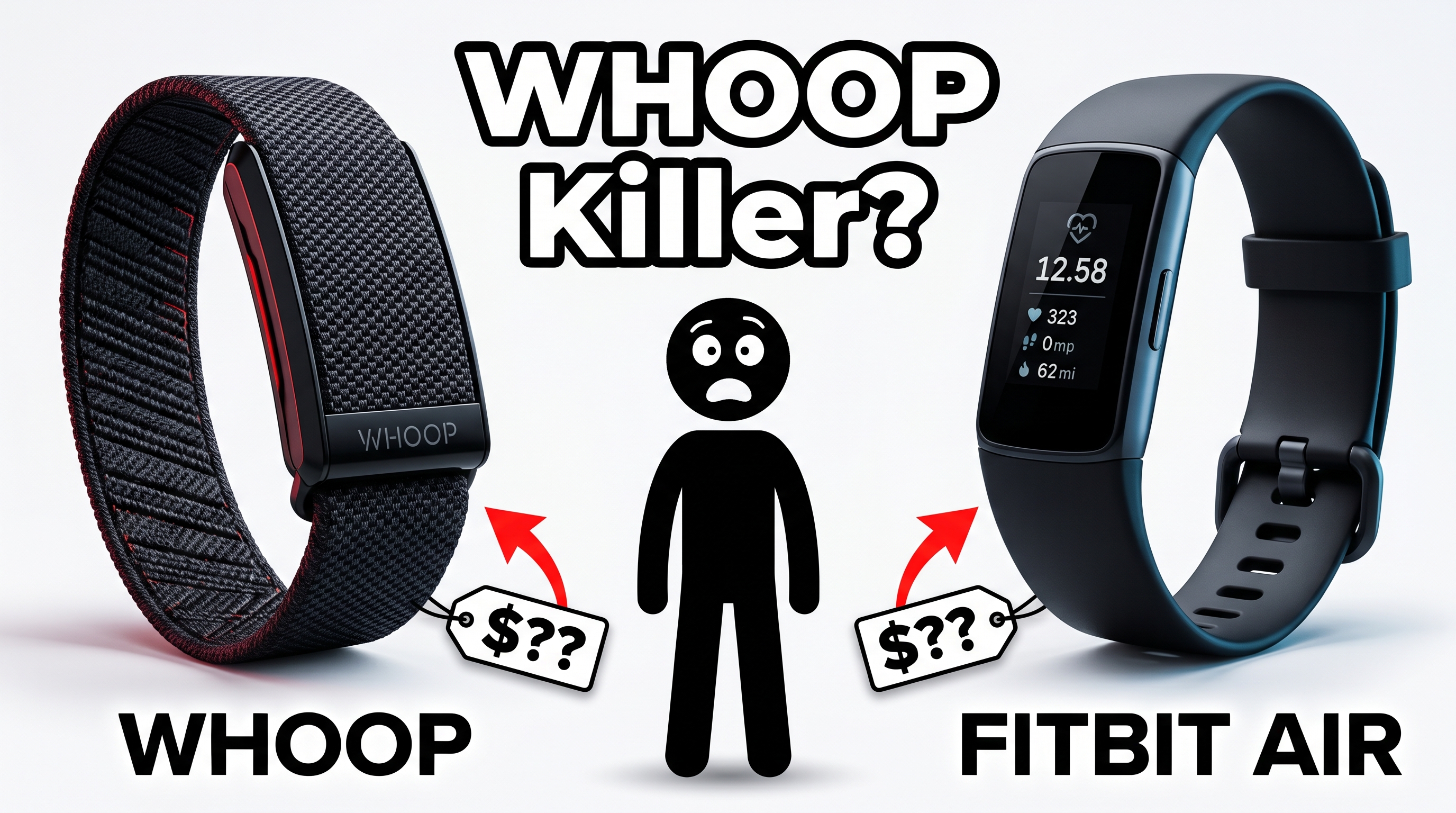
Fitness trackers have quietly split into two categories.
On one side, there are smartwatches that happen to include health features. On the other, there are dedicated fitness devices built entirely around recovery, training load, sleep quality, and long-term performance tracking.
That second category is where Whoop built its reputation.
For years, Whoop has become almost standard equipment among serious athletes, runners, cyclists, and people obsessed with recovery metrics. It’s lightweight, screenless, and designed to disappear into your routine while continuously collecting data.
Now Google is trying to enter the same space with Fitbit Air.
And the comparison matters because these two products approach fitness tracking from completely different business philosophies.
Whoop sells a subscription-first ecosystem. Fitbit Air sells a device that works without locking users into a yearly payment.
After spending nearly two weeks wearing both trackers alongside an Apple Watch during workouts, practices, recovery sessions, and sleep, the differences became surprisingly clear.
Not just in the data, but in who each product is actually built for.
The Subscription Problem Is Why Fitbit Air Exists
The biggest reason athletes are even considering switching away from Whoop has very little to do with hardware.
It’s the subscription.
With Whoop, you do not truly own the device. The tracker itself depends entirely on the membership. Stop paying, and the hardware effectively stops being useful.
That subscription starts around $200 per year and can climb higher depending on the plan.
For some people, that cost makes sense. If the product becomes part of your daily training system and recovery strategy, the value can justify the price.
But a lot of users have started asking a simpler question:
“What if I only need 80–90% of the experience?”
That’s exactly where Fitbit Air positions itself.
The device costs significantly less upfront, works without a mandatory subscription, and still covers the fundamentals most people actually care about:
- heart rate tracking
- sleep analysis
- workout detection
- calorie estimates
- recovery trends
- step tracking
Google also offers an optional premium subscription for AI coaching and deeper features, but the tracker itself remains functional without it.
That changes the psychological relationship users have with the product.
You’re buying hardware first instead of renting access to your own fitness data.
Fitbit Air Clearly Takes Inspiration From Whoop
The similarities are impossible to ignore.
Both devices are small, screenless wearables designed for 24/7 use. Both focus heavily on passive tracking rather than notifications or smartwatch features.
But Fitbit Air feels slightly more refined physically.
The tracker is smaller, lighter, and less noticeable on the wrist. The oval shape helps it disappear under sleeves, and the thinner band makes it look less like sports equipment.
The band system is also easier to swap.
Whoop still has the advantage when it comes to accessories and ecosystem maturity. Years in the market means there are already bicep straps, chest straps, clothing integrations, and third-party accessories everywhere.
Fitbit Air is still early.
Right now, the experience feels more focused and minimal rather than deeply customizable.
That may actually work in its favor.
A lot of people are exhausted by fitness products that try to become entire lifestyles.
Fitbit Air feels more like a tool.
The Difference Between These Devices Isn’t Hardware
The hardware is honestly close enough that most users would adapt to either one quickly.
The real difference is software interpretation.
That’s where the philosophy split becomes obvious.
Whoop is designed for people who actively optimize training and recovery. The app is dense with metrics, strain scores, recovery percentages, stress tracking, journals, trends, and long-term health analysis.
It assumes the user wants to analyze performance.
Fitbit Air takes a much simpler approach.
The Google Health app surfaces information in a cleaner, more approachable way. Instead of overwhelming users with dozens of metrics at once, it tries to translate data into practical suggestions.
That includes an AI coach which builds workout recommendations and recovery guidance based on your habits and goals.
Surprisingly, the AI experience is better than expected.
The responses feel grounded instead of gimmicky. It avoids extreme advice and consistently pushes sustainable habits rather than unrealistic transformations.
That sounds like a small detail, but it matters.
A lot of fitness software still treats motivation like a marketing campaign instead of a long-term behavioral problem.
Google’s implementation feels more practical.
Still, advanced users will probably outgrow it faster than they would with Whoop.
Whoop gives experienced athletes more tools to interpret their own data rather than simplifying everything for them.
Accuracy Matters More Than Features
Fitness trackers live or die based on consistency.
Absolute precision is almost impossible with wrist-based wearables. What matters is whether the device produces reliable trends over time.
During testing across strength training, HIIT sessions, cardio workouts, Ultimate Frisbee practices, and sleep tracking, a few patterns stood out quickly.
The Apple Watch consistently estimated higher calorie burn than both Fitbit Air and Whoop.
That was expected.
The more interesting comparison was between Fitbit Air and Whoop.
Heart rate tracking stayed surprisingly close across most workouts. The differences were usually small enough that they wouldn’t meaningfully change training decisions.
Calories burned varied more depending on workout type, but the larger distinction was how each platform summarized effort.
Whoop uses strain scores and recovery percentages.
Fitbit Air uses cardio load.
Different names, similar goal.
Both systems are essentially trying to answer the same question:
“How hard are you pushing your body relative to your normal baseline?”
Once calibration finished, Fitbit Air became noticeably more accurate at understanding workout intensity and recovery patterns.
That onboarding period matters more than most users realize.
These devices are not instantly personalized. They improve after learning your sleep habits, resting heart rate, activity patterns, and recovery behavior over time.
Where Apple Watch Still Wins
Wearing all three devices at once made something obvious.
Apple Watch still dominates convenience.
Notifications, quick interactions, GPS, music controls, and general smartwatch features make it easier to live with daily.
For beginners, that simplicity is probably enough.
Most people do not need advanced recovery analysis.
They need reminders to move more, sleep better, and stay active consistently.
Apple Watch handles that extremely well.
Whoop and Fitbit Air exist for people who care about fitness data beyond simple activity rings.
That audience is smaller, but also much more invested.
Fitbit Air Feels Like the Middle Ground
After using all three systems side by side, the market separation feels clearer than ever.
Apple Watch is mainstream fitness.
Whoop is performance optimization.
Fitbit Air sits directly between them.
That middle position is probably why it has a real chance to succeed.
For athletes who want deeper insights without committing to an expensive recurring subscription, Fitbit Air makes a compelling argument.
It delivers most of the experience people actually use daily while removing the part many users dislike most: the feeling of permanently paying to access hardware they already bought.
At the same time, Whoop still feels more complete for users who obsess over recovery metrics, long-term performance trends, and advanced health analysis.
And that’s probably the important distinction.
Fitbit Air is not necessarily a Whoop replacement for elite users.
It’s a Whoop alternative for everyone else.
That difference matters more than marketing comparisons ever will.