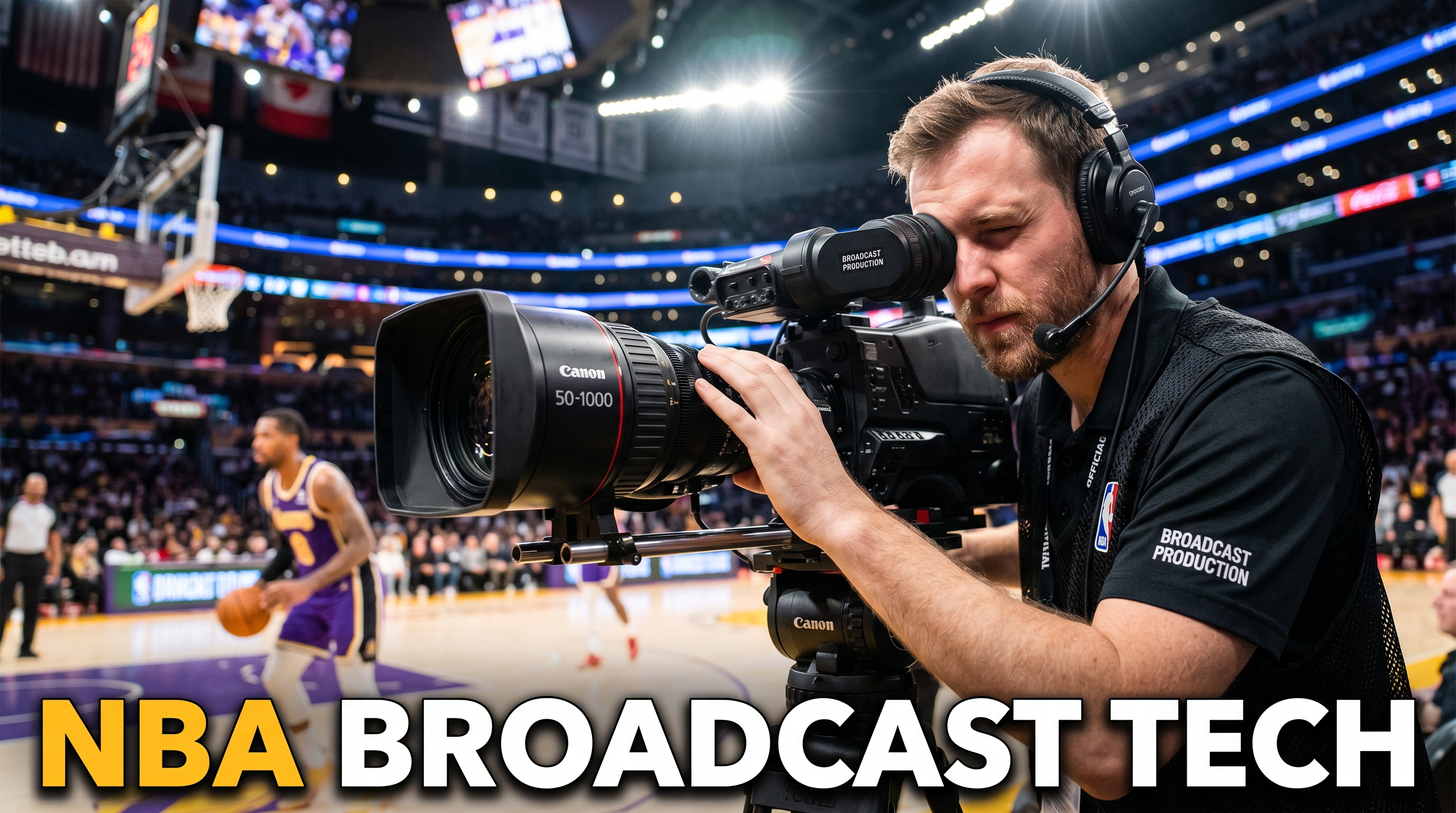
Most people watch an NBA game without thinking much about the production behind it. The camera cuts feel natural. Replays appear instantly. Audio transitions happen so smoothly that you barely notice them. When the broadcast is working perfectly, the technology disappears into the experience.
That illusion takes an absurd amount of coordination.
I recently spent time looking behind the scenes of a professional NBA broadcast setup, and what stood out wasn’t just the expensive hardware. It was the sheer precision of the people operating it. From camera operators manually tracking players at extreme zoom levels to engineers balancing dozens of live feeds in real time, the entire system feels closer to live filmmaking than traditional sports coverage.
And unlike film production, there are no second takes.
The Camera Operators Are Doing Far More Than It Looks
One clip making the rounds online showed a broadcast operator perfectly tracking players with an ultra-tight zoom lens during live gameplay. A surprising number of people reacted with some variation of “that doesn’t seem very hard.”
It is hard.
At broadcast zoom levels, even tiny movements become difficult to control. Keeping a fast-moving player centered while simultaneously managing focus and zoom requires muscle memory built through repetition. The operators make it look easy because they’ve done it thousands of times.
Most of the arena cameras are built around compact Sony broadcast systems paired with massive Canon servo zoom lenses. On paper, the camera bodies themselves aren’t especially impressive by consumer standards. Many are limited to 1080p capture with relatively small sensors.
But that misses the point entirely.
These systems are optimized for reliability, low latency, global shutter performance, and long-duration live operation. The real engineering marvel is often the lens system attached to them.
Some of these Canon broadcast lenses reach absurd focal lengths while still maintaining stabilization and precise motorized control. Operators can smoothly zoom from a wide game shot into a tight player close-up within seconds, all while maintaining usable focus.
The controls themselves are surprisingly ergonomic once you understand them. Zoom is handled through one servo control, while focus is manually adjusted through another rotational grip. Simple in concept. Extremely difficult under pressure.
And pressure matters because these operators are constantly receiving instructions from the production team through headsets. A director might suddenly request a close-up of a specific player, and the camera operator has only seconds to identify them, frame the shot, focus correctly, and deliver a usable image.
That’s one reason many operators keep quick-reference sheets with player photos nearby. In a fast live environment, recognition speed matters.
The Arena Is Packed With Specialized Cameras
The obvious cameras are only part of the setup.
An NBA arena can easily contain dozens of cameras positioned for very specific purposes. There are dedicated game cameras, isolated player cameras, coach cameras, mobile-format cameras for vertical broadcasts, and remote systems hidden around the court.
One of the most recognizable shots in basketball broadcasting is the sweeping arena intro before tip-off. That cinematic move usually comes from a suspended cable camera system mounted high above the court.
Operating it requires two people working together in sync.
One controls the movement of the rig through three-dimensional space. The other manages the camera itself — framing, zoom, focus, and orientation. It’s essentially coordinated aerial cinematography happening live over thousands of spectators.
Then there’s the stanchion setup around the basket itself.
The basketball hoop structure is filled with cameras and microphones because it’s one of the few places where broadcasters can get physically close to the action without interfering with gameplay. Wide-angle cameras capture collisions under the rim. Overhead systems track dunks from directly above the basket. Remote-controlled cameras behind the glass provide iconic replay angles.
Even small details matter. Photographers sometimes wrap dark material around lenses mounted behind the backboard to reduce reflections from the glass.
Nothing is accidental.
Audio Is Doing Half the Work
Sports broadcasts would feel strangely lifeless without proper audio design.
The sound of sneakers on hardwood. The echo of the rim. The crowd reacting half a second before a big play. Trash talk picked up near the baseline. All of it contributes to the emotional pacing of the game.
To capture that atmosphere, arenas are covered with hidden microphones.
Some are focused on crowd ambience. Others isolate court sounds. Specialized microphones near the basket emphasize rim impacts and net movement. Engineers constantly balance these feeds live so the mix feels immersive without overwhelming commentary.
That balancing act is harder than most viewers realize because the environment changes every second. A quiet possession can instantly turn into a deafening fast-break dunk sequence.
The audio team has to adapt in real time.
The Broadcast Trucks Are Where Everything Comes Together
The most impressive part of the entire operation may actually sit outside the arena.
Broadcast trucks parked nearby act as mobile production studios packed with control systems, replay stations, routing infrastructure, color management tools, and live editing hardware.
Every camera feed and microphone signal flows into these trucks simultaneously.
Inside, teams are making constant decisions in real time:
- Which camera should go live next
- Which replay angle best tells the story
- How to maintain consistent color across different cameras
- How to balance commentary against crowd noise
- When to cut to reactions, coaches, or player close-ups
And all of this happens while the game continues uninterrupted.
That’s what makes live sports production uniquely difficult. A movie can spend months refining scenes in post-production. Sports broadcasting has to produce a finished product instantly as events unfold.
One especially fascinating part of the workflow is replay control.
Dedicated replay operators work with systems that allow frame-accurate scrubbing through incoming footage seconds after a play occurs. Using specialized hardware controllers, they can slow footage smoothly, freeze critical moments, or replay sequences at varying speeds almost immediately after the action happens.
When viewers see a perfectly timed slow-motion replay during a live game, there’s usually an operator behind the scenes making split-second technical decisions under pressure.
And when the production team does its job well, most viewers never think about any of this.
That’s probably the strongest sign of how good they are.
Why It Deserves More Respect
Modern NBA broadcasts are a combination of engineering, cinematography, live editing, networking, audio production, and human coordination operating at massive scale.
The cameras are impressive. The lenses are expensive. The infrastructure is enormous.
But the real skill is still human.
A great operator can track action instinctively. A great director can anticipate emotion before it happens. A great replay team can turn a two-second moment into something memorable for millions of viewers watching live.
The technology enables the production, but experience is what makes it feel effortless.
And once you see how much work goes into building a single live broadcast, it becomes impossible to watch a game the same way again.